Zereshk Polo — Saffron Rice with Barberries and Chicken
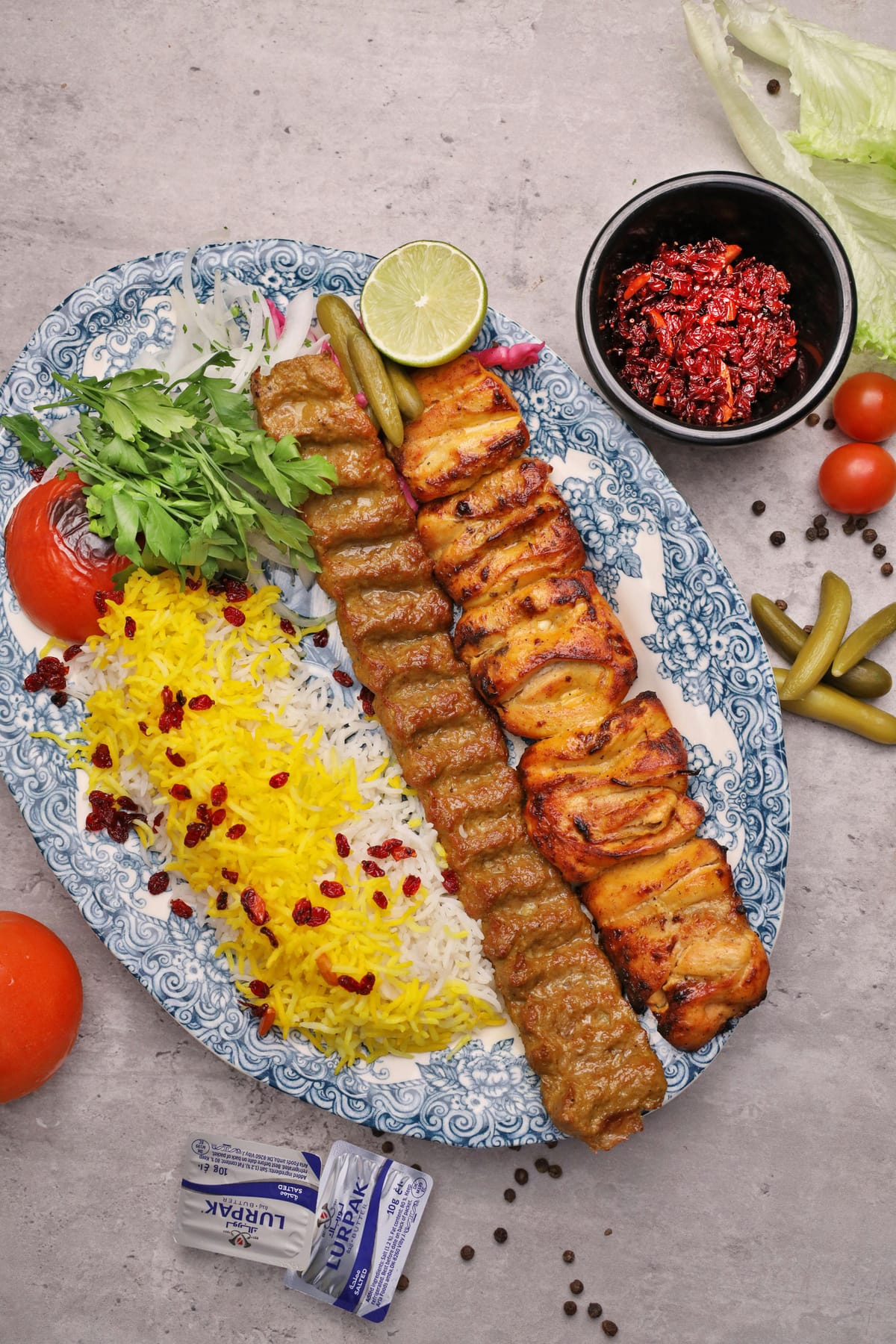
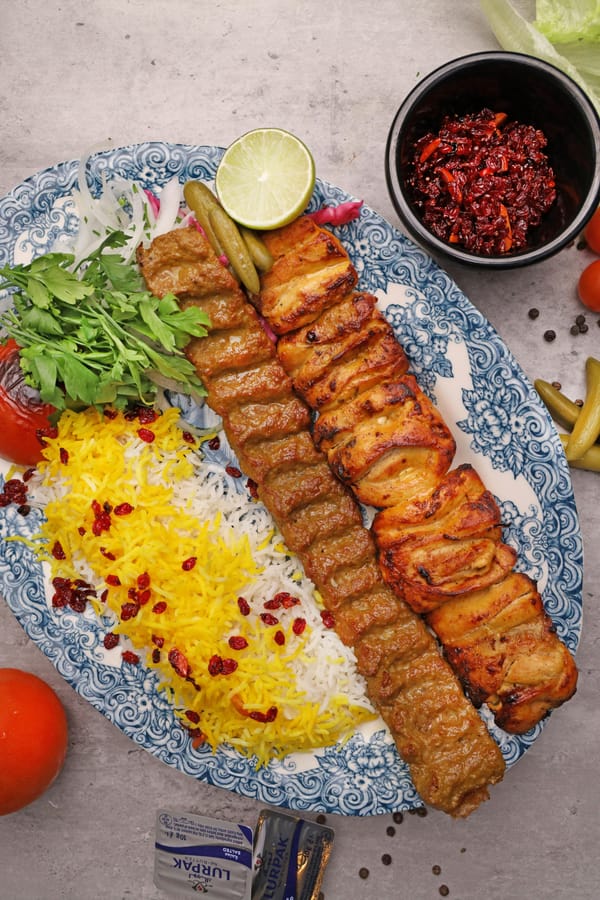
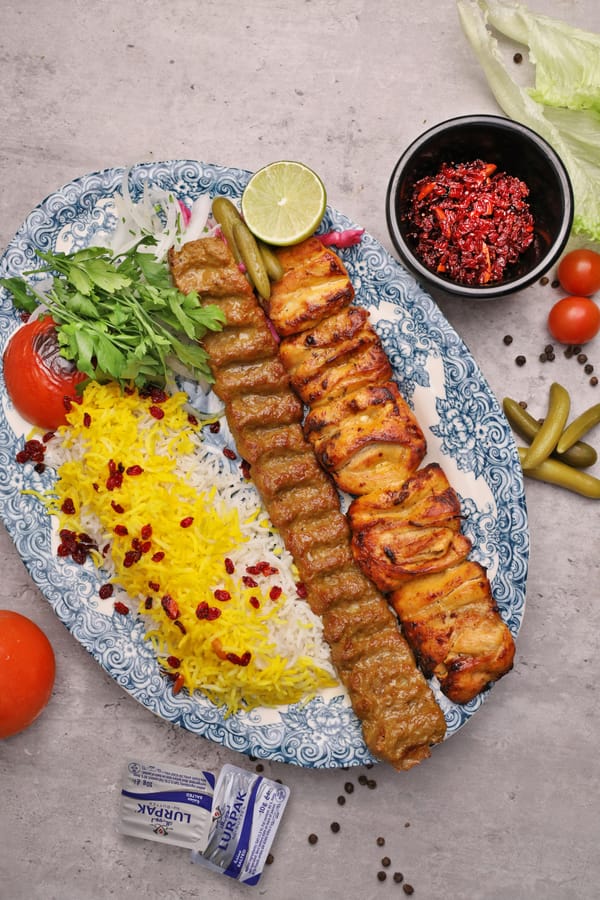
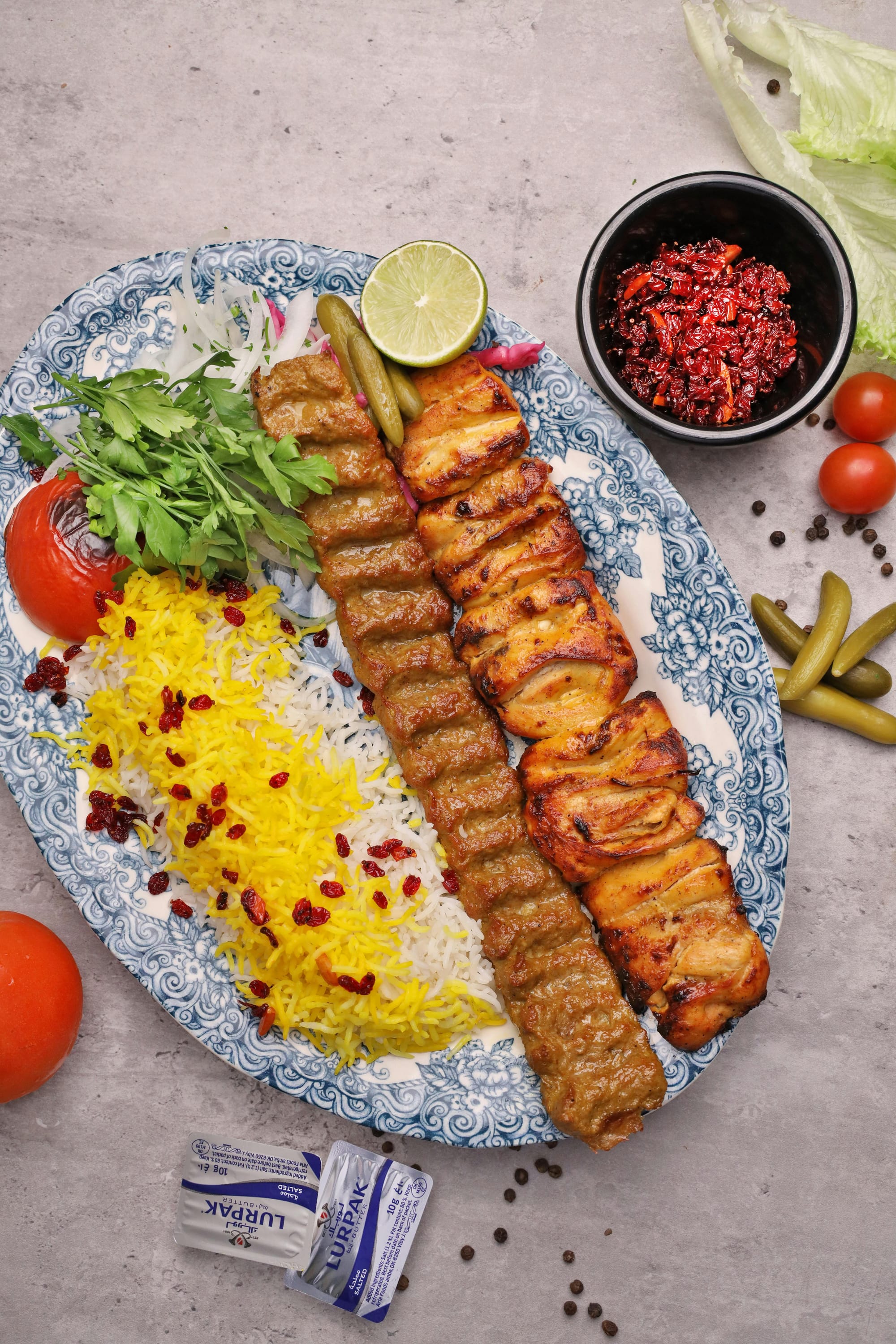
You've seen this rice. Long-grain basmati, half white and half deep saffron-gold, scattered with ruby-red barberries that look almost too jewel-like to eat. It's the rice on every wedding table, every Nowruz spread, every Friday lunch where the family is gathering. Zereshk Polo ba Morgh — barberry rice with chicken — is the Persian celebration dish.
The chicken version below is the classic. But the rice technique is the prize: master it once, and you can lay anything over it — Koobideh, Joojeh, lamb shank, fish, even a fried egg.
Ingredients (serves 6)
For the rice
- 3 cups aged basmati rice (look for "extra long grain")
- 3 tbsp kosher salt + more for serving water
- 3 tbsp neutral oil
- 2 tbsp unsalted butter, plus 2 tbsp more for the barberries
- Saffron: 1 tsp threads ground with a pinch of sugar, bloomed in 1/4 cup hot water
For the barberries
- 1 cup dried zereshk (Persian barberries) — found at Persian/Middle Eastern groceries or online
- 2 tbsp butter
- 2 tbsp sugar
- 1/4 cup slivered pistachios and almonds (optional but festive)
For the chicken (optional but classic)
- 4 bone-in, skin-on chicken thighs
- 1 large onion, sliced
- 2 tbsp tomato paste
- 2 cups chicken stock
- 1/2 tsp turmeric, 1/2 tsp cinnamon, salt and pepper
- 1 tsp saffron, bloomed
The rice — read this whole section before starting
- Rinse. Rinse the rice in a fine-mesh strainer until water runs clear (3–5 cycles).
- Soak. Cover with cold water + 2 tbsp salt. Soak 1 hour. Drain.
- Parboil. Bring 8 cups of water to a rolling boil with 2 tbsp salt. Add the rice. Boil 6–8 minutes — until the grain is firm but bends without snapping. Drain immediately and rinse with cool water to stop the cook.
- Build the tahdig. In your pot (non-stick or well-seasoned cast iron), heat 3 tbsp oil + 2 tbsp butter over medium. Spread a thin even layer of rice across the bottom — this becomes the crispy tahdig.
- Mound the rest. Add the remaining rice in a pyramid. Poke 5–6 deep holes with the handle of a wooden spoon. Drizzle 2 tbsp water and 2 tbsp melted butter over the top.
- Steam. Wrap the pot lid in a clean kitchen towel (catches steam), clamp on. Cook on medium-high 8 minutes until you hear sizzling, then turn to low and steam 40 minutes. Don't peek.
- Color half. Scoop out 2 cups of the cooked rice into a bowl. Pour the bloomed saffron over it — this becomes the gold half.
The barberries
- Soak the dried barberries in cold water 10 minutes. Drain.
- Melt 2 tbsp butter in a small skillet. Add the barberries and 2 tbsp sugar.
- Stir gently just 60 seconds — they go from ruby to charred-black very quickly. Pull off the heat.
The chicken
- Brown the chicken in a Dutch oven. Remove.
- Sauté the onion until soft. Add tomato paste, turmeric, cinnamon. Cook 1 minute.
- Return the chicken, add stock, salt, pepper. Simmer covered 35 minutes.
- In the last 5 minutes, stir in the bloomed saffron.
To plate
Pile white rice on one half of a wide platter, saffron rice on the other. Scatter barberries down the seam and across the top. Lay the chicken over or beside. Crack the tahdig at the table — break it into shards and pass it around. The tahdig fight is half the fun.
The right tool matters. If your kababs spin, drop, or split, it's usually the skewer — not the meat. See why we built ours 25 mm wide and 2 mm thick →