The 9-Tool Kit Every Persian Kabab Cook Actually Needs
If you spend enough time on cooking blogs, you'll come away thinking Persian kababs require a lab full of gear. They don't. We've made Koubideh, Joojeh, Barg, and Soltani platters out of friends' kitchens with the absolute minimum. Here's the list — what's essential, what's nice, and what you can skip entirely.
The non-negotiables (1–3)
1. Flat Persian skewers, 25 mm × 600 mm
Already explained at length in a separate post. Short version: round skewers do not work for Koubideh, full stop. The flat blade is the entire point. Get a set of six in stainless and stop thinking about it.
Start here. The rest of the list works with anything; this one doesn't compromise.
Six flat skewers and a canvas pouch. Made by us in California.
See the Arta skewer set →2. A heavy non-stick pot, 4–6 qt, with a domed lid
For chelo — Persian saffron rice with tahdig. The non-stick is what lets you flip out the rice and crack the crust. A cheap one is fine; expensive ones aren't better at this. Domed lid matters because it traps steam well.
3. A charcoal grill or mangal
For Koubideh specifically. Gas works for everything else but loses the dimension you actually came for. A $40 portable charcoal grill is enough. The grate should be removable so the skewers can rest on the rim.
The really-importants (4–6)
4. Box grater (large holes)
For grating onion — the cornerstone of every Persian kabab. A food processor pulverizes the onion into juice; you want pulp. Grate by hand, then squeeze out the liquid through cheesecloth or a clean towel.
5. Mortar and pestle (small)
For grinding saffron threads with a pinch of sugar before blooming. Saffron isn't fully expressed until it's broken down — and a pinch goes far further ground than whole. The smallest mortar is fine.
6. Fine-mesh strainer
For rinsing rice (5+ times until water runs clear). Standard colanders have holes too big — basmati grains slip through.
The nice-to-haves (7–9)
7. A wide, flat platter (oval, about 16 inches)
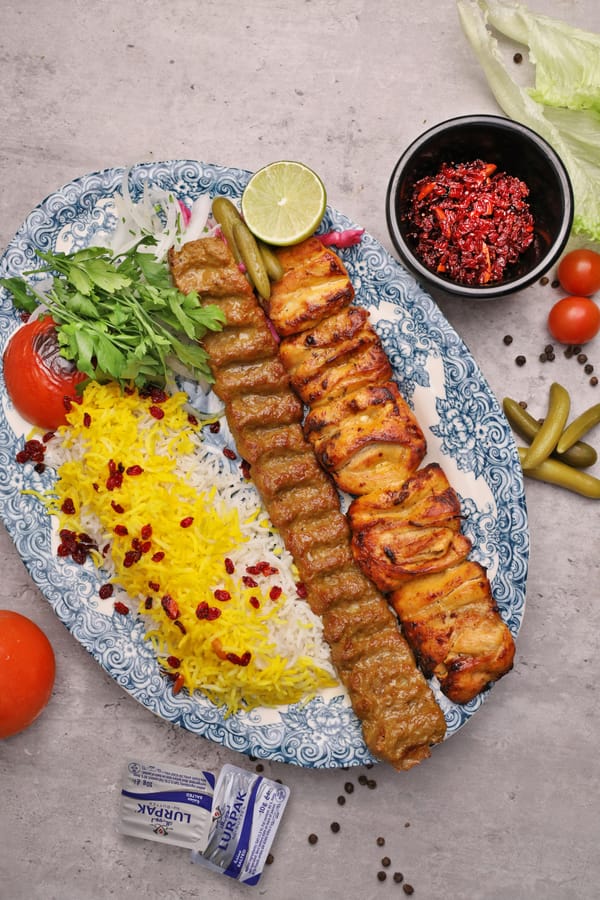
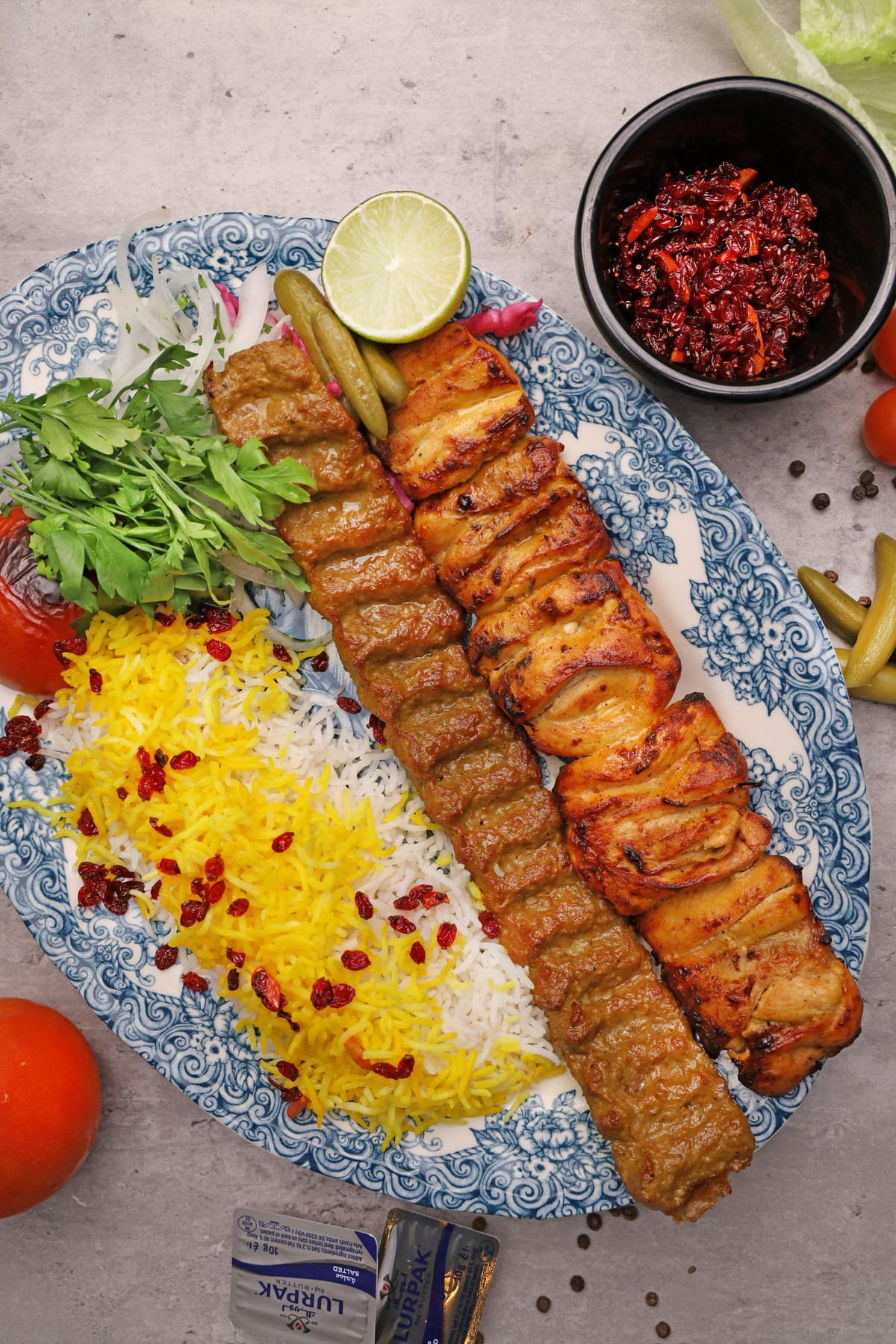
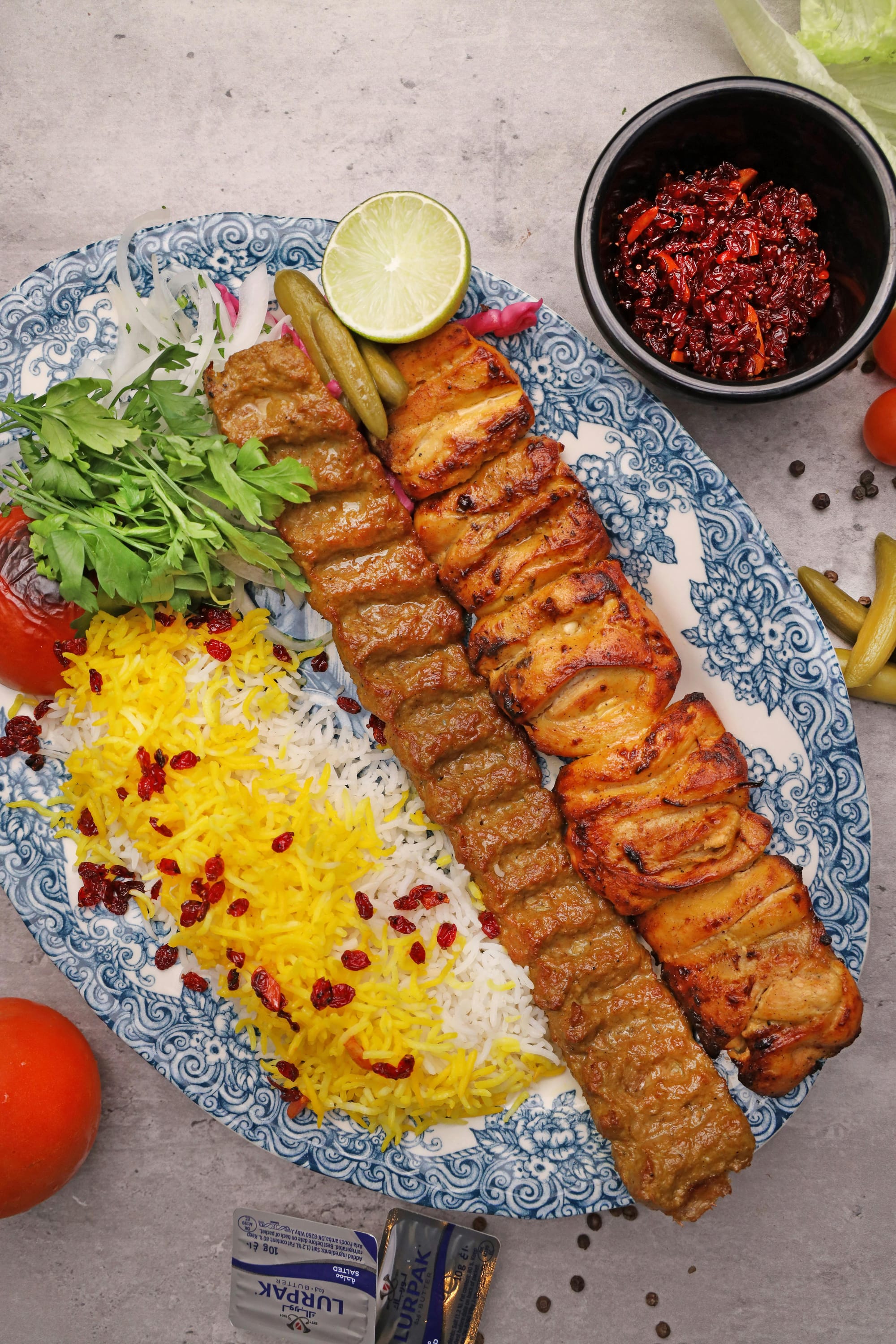
Persian plating is visual. The kababs lay down one side, the rice down the other, the grilled tomato in the corner, the lime wedge, the herbs. A round dinner plate doesn't give you the geography for this. A long oval platter is what restaurants use, and a $20 ceramic version is fine.
8. A clean kitchen towel
Sounds silly. It's not. You wrap the towel around the lid of the rice pot during steaming — it absorbs the condensation that would otherwise drip back and turn your fluffy rice into wet rice. Every Persian kitchen has a designated rice-towel. You can use any clean cotton towel; just remember not to put it in the wash with the family's good linens.
9. A heavy spatula with a thin edge
For lifting tahdig out of the pot. Thick plastic ones bend; thin metal ones scratch non-stick. A thin fish-spatula-style one in flexible nylon is the goldilocks pick.
What you don't need
- Sous-vide. Persian kabab is a high-heat short-cook tradition. The sous-vide vacuum bag is the opposite of what this is.
- "Persian kabab seasoning blend." Salt, pepper, turmeric, sumac, and sometimes a pinch of cardamom. Buy them separately and use them in different ratios for different kababs.
- A meat thermometer. Koubideh is done by time, not temperature. 5 minutes total on a hot charcoal grill.
- A specialized "kabab grill." A regular charcoal grill with the grate off is the same thing.
The shortest possible kit
If you had to pick three: flat skewers, non-stick pot, charcoal grill. Everything else can be improvised. Those three can't.
The first item on the list isn't optional.
If you only buy one thing from this post, make it the skewers.
See the Arta skewer set →Once the kit is settled, the menu is the next question. Start with the Koubideh, then add chelo, then zereshk polo. By the third weekend you'll have a Soltani.