Why Your Koubideh Falls Off the Skewer (and the Real Fix)
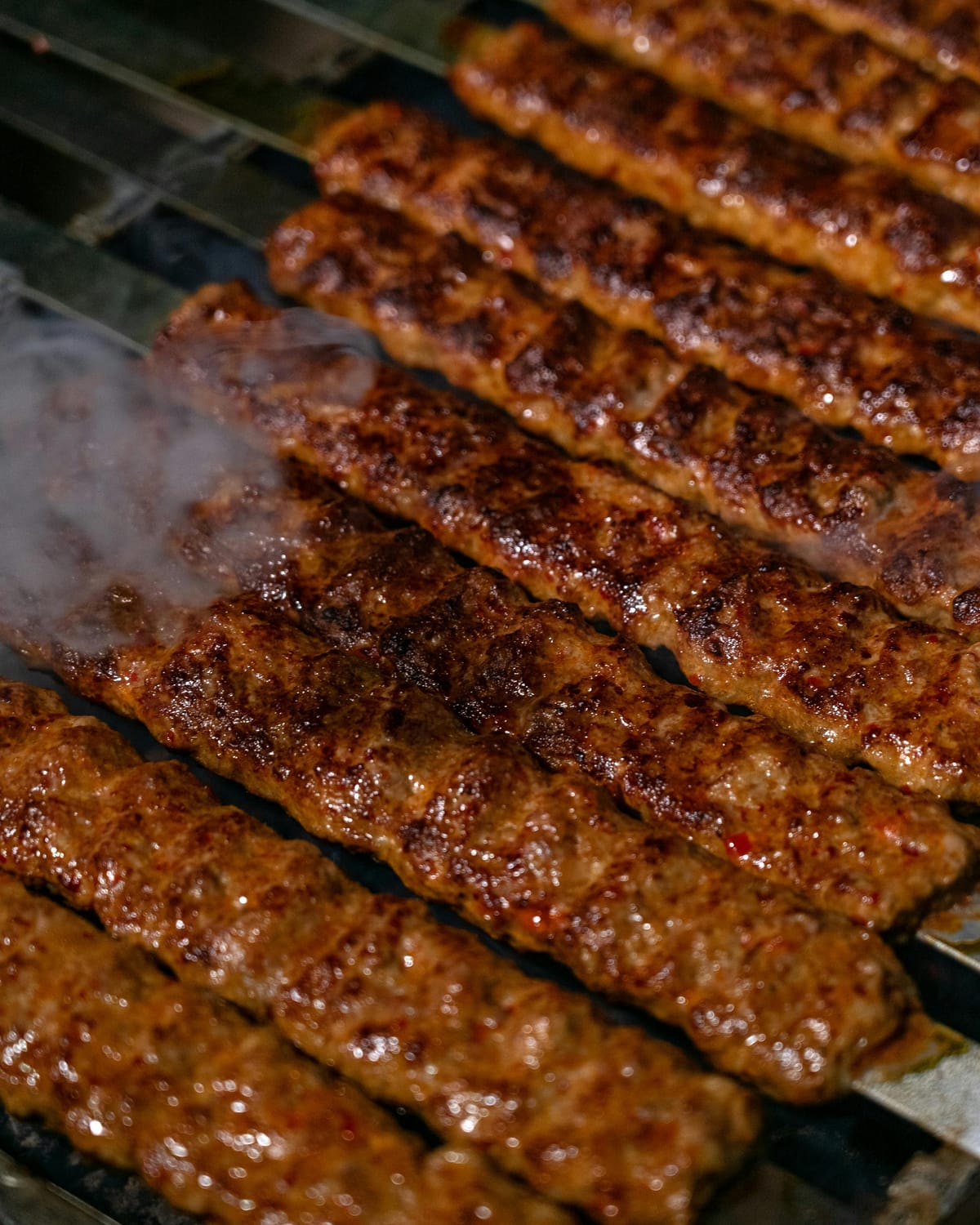
You did everything right. You ground the lamb twice, you grated the onion fine, you kneaded the meat for ten full minutes until it was almost paste. You rested it in the fridge for two hours. You built a hot charcoal fire. You went to slide the skewer over the coals — and within ninety seconds, half the meat was on the grate and the other half had spun limp around the rod.
If this has happened to you, I have bad news and good news.
Bad news: You can fix everything else in the recipe — the meat, the fat ratio, the salt, the rest time — and it will keep happening.
Good news: The fix is one decision you make once, and then you never have to think about it again.
The fix is the skewer.
Persian Koubideh was designed around a specific tool. Use it, and the recipe works.
See the Arta skewer set →What's actually happening when Koubideh slides off
Ground meat doesn't grip. It hangs. The only thing holding a Koubideh on a skewer is the friction between two flat-ish surfaces — the inside of the meat tube and the outside of the skewer.
When you use a round bamboo skewer or a thin metal one from the grocery store, here's what happens at three critical moments:
- The moment you lift it. The meat sags under its own weight. On a round skewer, there's nothing to hold the bottom half in place — gravity spins the meat around the shaft.
- The moment heat hits. The outer surface of the meat tightens and contracts. The inner surface stays soft and shifts. On a round skewer, this shift means rotation. The meat is now hanging upside down, fat-side over the coals.
- The moment you flip. You turn the skewer. The meat doesn't turn with it — it pivots around the round shaft like a propeller. The seared crust faces up, the uncooked bottom faces down, and physics takes over.
Three failure points. All of them disappear when you change the geometry of the skewer.
The geometry that solves it
A Persian kabab skewer — done right — has three properties:
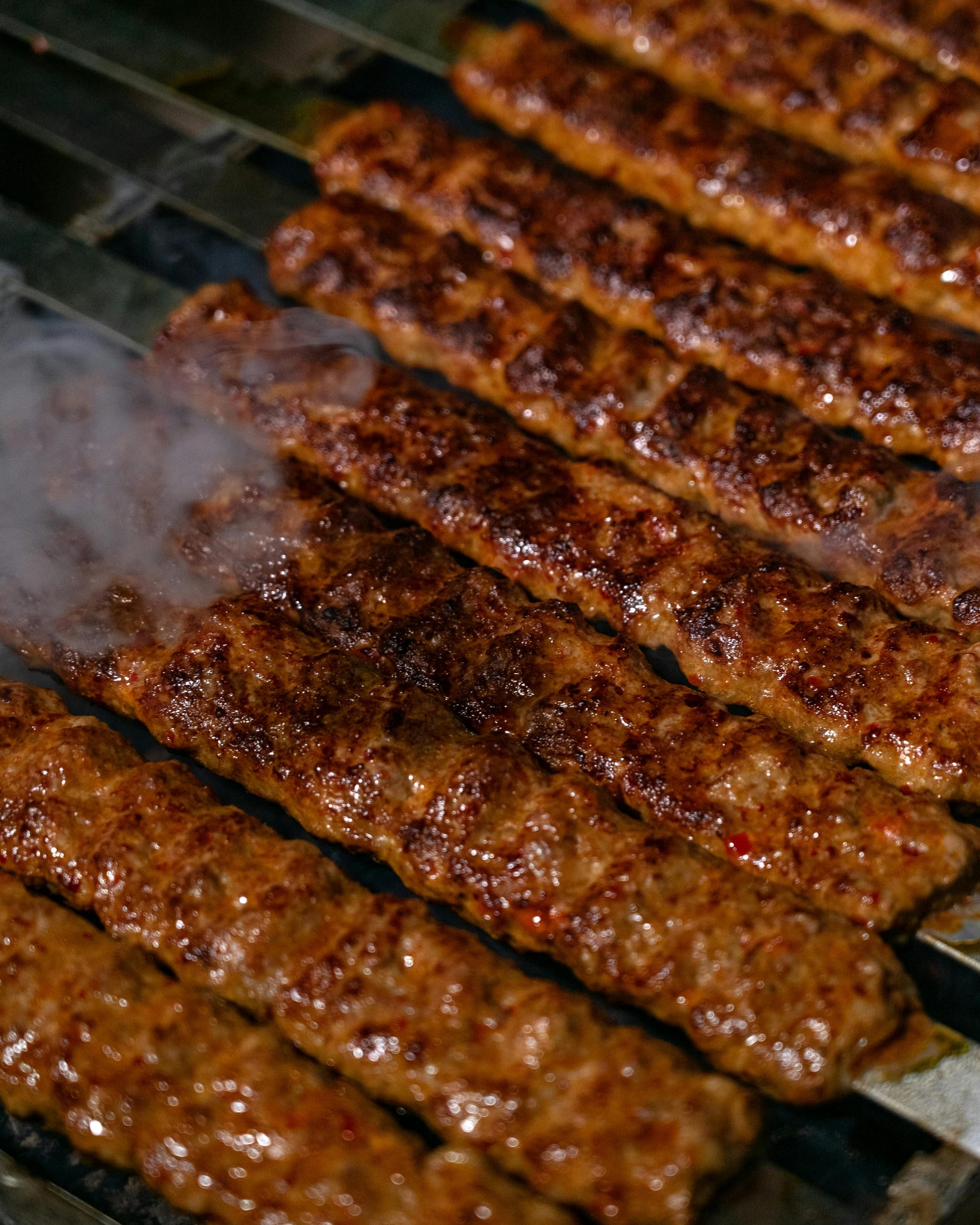
- Flat blade, not round. The flat face mechanically locks the meat in place. There's no axis to spin around. When you rotate the skewer, the meat rotates with it.
- Wide — about 25 mm (1 inch). Wider than that, the meat can't grip the edges. Narrower, and it pivots like a round skewer would.
- Long enough to span a grill — about 600 mm (24 inches). So the handle end stays cool and the meat hangs above the coals without resting on a grate. Resting on a grate is what causes the bottom side to stick and tear.
This is exactly the geometry the bazaar metalsmiths in Tehran and Tabriz have made for a hundred years. There's a reason.
"But I have flat skewers and it still falls"
A handful of failure modes survive the right skewer. Quick triage:
- Meat too lean. Below 20% fat, the bind doesn't hold. Ground sirloin alone will not work. Mix in lamb shoulder or ground chuck.
- Onion not drained. If you grate onion and put the wet pulp straight into the meat, the kabab steams instead of sears and gravity wins. Always squeeze the onion in cheesecloth first.
- Skipped the knead. Ten minutes minimum. The meat should be tacky enough to lift a fingerprint when you press it. Less than that and you've made meatloaf, not Koubideh.
- Dry hands. When forming the meat on the skewer, wet your hands. Dry hands grab the meat instead of sliding along it; you'll tear it off as you shape.
- Resting on the grate. The skewer should rest on the rim of the grill or mangal. Not on the grate. If the meat touches metal, it sticks and tears.
Cost-benefit
A set of six proper flat skewers runs about the same as one mediocre takeout Soltani. Buy them once, use them forever, and never have a Koubideh disaster again. The recipe in your head was always correct — it was just designed around a tool you didn't have yet.
Make your next Koubideh the way it was designed to be made.
Six skewers, one canvas pouch, the right geometry. Built by a Persian family in California.
See the Arta skewer set →Want the full Koubideh recipe? Here's our family version. Want to know why we settled on 25 mm wide? We wrote about that too.