Tabrizi-Style Spicy Koobideh — The Bolder Northern Cousin
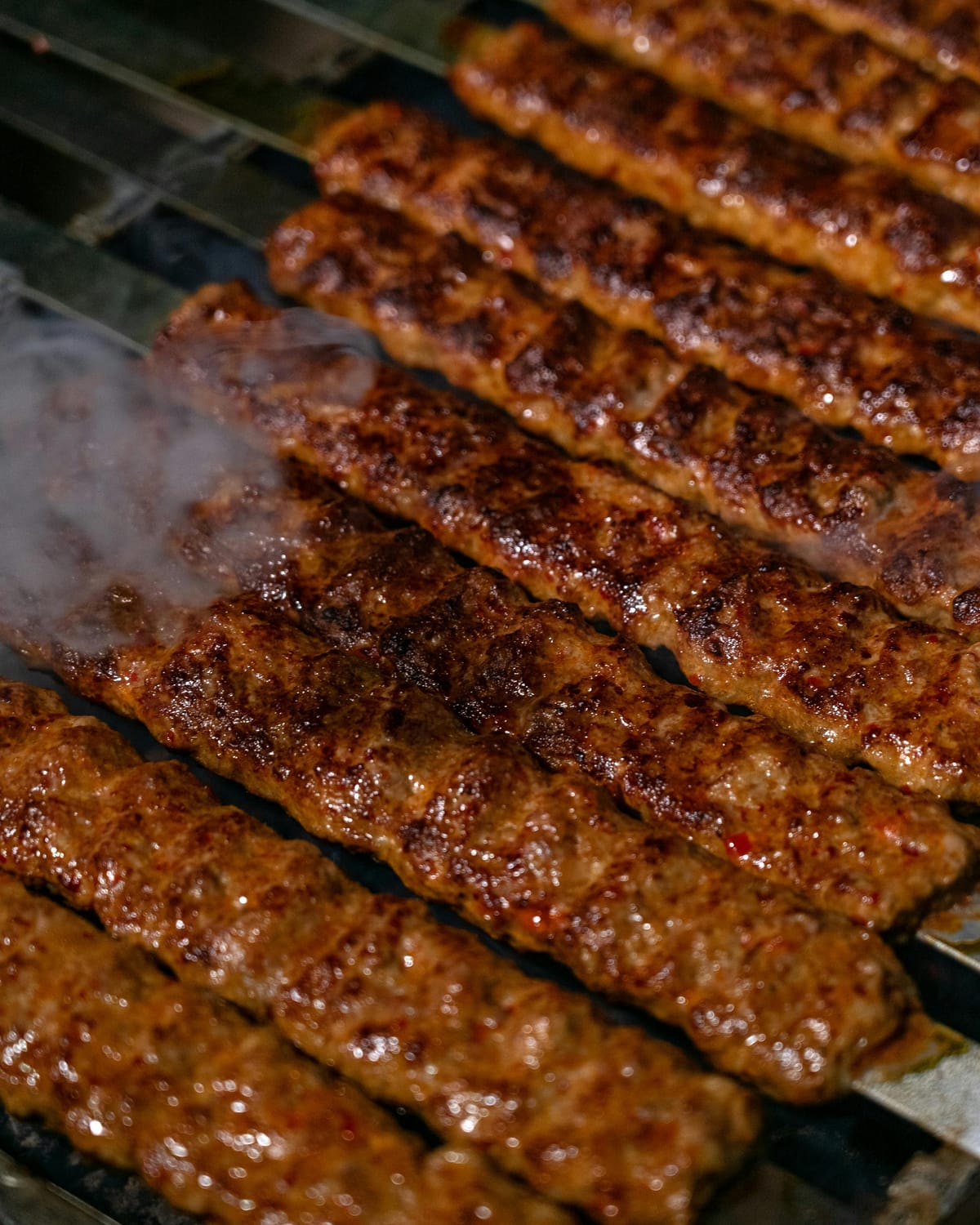
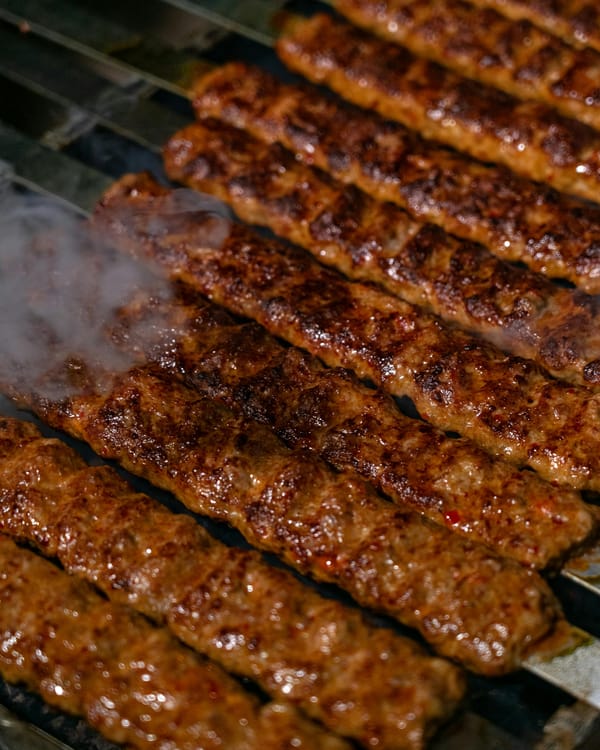
If you've made our classic Koubideh a few times and you're ready to play with the recipe, this is where to start. Tabrizi-style Koobideh comes from northwest Iran — Azerbaijani-influenced, peppery, with chili flakes (Aleppo or Marash if you can get them) worked into the meat. The kababs are thicker, the onion ratio is higher, and the seasoning has a bolder hand.
Same technique. Different attitude.
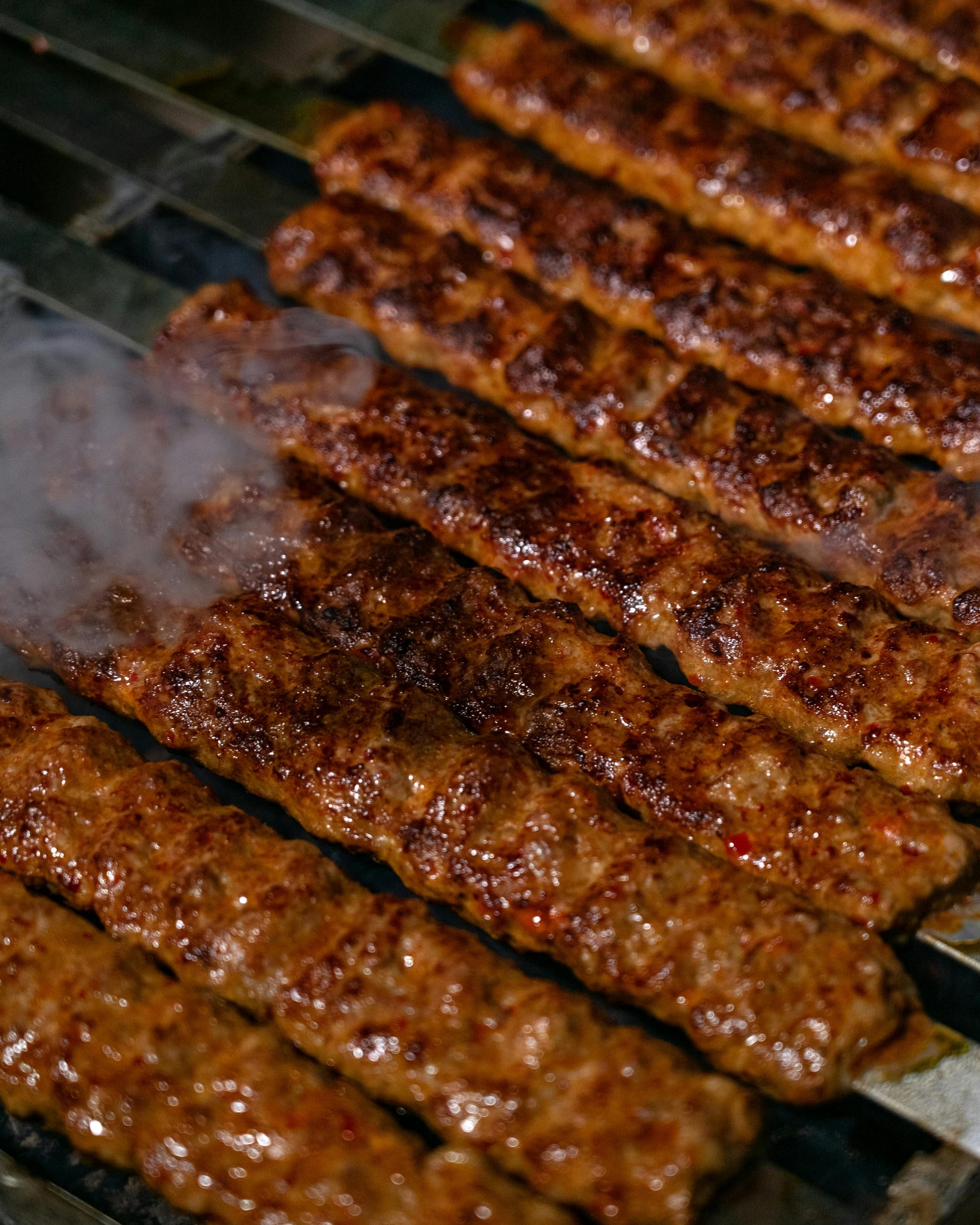
What makes it Tabrizi
- Higher fat ratio — 25–30% fat in the ground lamb (the classic Tehrani version uses 20%)
- More onion — nearly 1:1 with the meat by weight (Tehrani is 1:2)
- Chili flake worked in — Aleppo or Marash pepper, plus black pepper, plus a touch of sumac
- Thicker shape — kababs are formed about 1.25" diameter instead of the usual 0.75"
- Less rest time — the meat goes on the skewer warm so the fat stays soft
Ingredients (4 skewers — feeds 3)
- 1.5 lb ground lamb, 25–30% fat (or 1 lb lamb + 0.5 lb ground beef chuck)
- 1 large yellow onion (about 12 oz), grated fine and drained of excess liquid
- 1 tbsp Aleppo or Marash chili flake (start here; add more if you like heat)
- 1.5 tsp ground black pepper
- 1 tsp ground sumac, plus more for serving
- 2 tsp kosher salt
- 1/2 tsp ground turmeric
- Optional: 1/4 tsp baking soda (helps with bind)
- 4 flat 1-inch skewers — the wide blade is non-negotiable for thick kababs (round skewers will spin and dump the meat into the coals)
Method
- Drain the onion. Grate the onion on the large holes of a box grater. Wrap in cheesecloth or a clean kitchen towel and squeeze hard — discard the liquid. You want pulp, not soup.
- Mix and knead. In a large bowl, combine the meat, drained onion, salt, pepper, chili flake, sumac, turmeric, and baking soda if using. Knead with your hands for a full 8–10 minutes, pressing and folding the meat. The mixture should become tacky and almost paste-like.
- Rest, briefly. Cover and refrigerate just 30 minutes (Tehrani Koobideh rests 2+ hours — Tabrizi prefers a shorter rest to keep the fat workable).
- Form on the skewer. Take a handful (about 6 oz). With wet hands, press it firmly onto a 1-inch flat skewer, working from the center out. Pinch every inch or two to make the signature ridges. Aim for ~1.25" thick, about 8" long per skewer.
- Grill hot. Set up a hot charcoal grill — coals should be glowing white-orange, no flame. Lay the skewers across the rim so the meat hangs above the coals without touching the grate.
- Cook 90 seconds, flip. Cook 90 seconds on the first side — DO NOT move them or they'll tear. Flip once. Another 90 seconds. Flip and rotate 45° to get the cross-hatch.
- Total time: About 5–6 minutes for these thicker kababs. The crust should be deep brown, the inside still juicy.
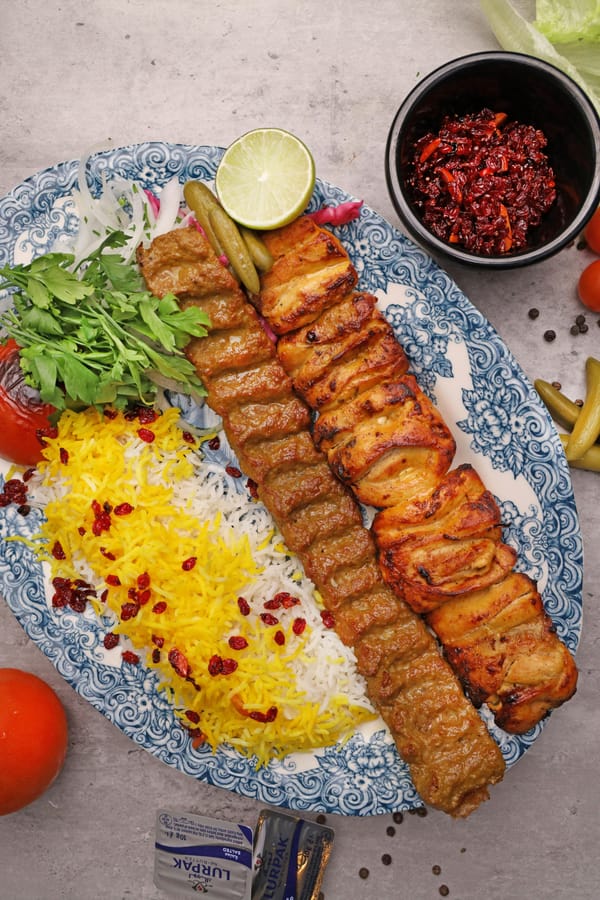
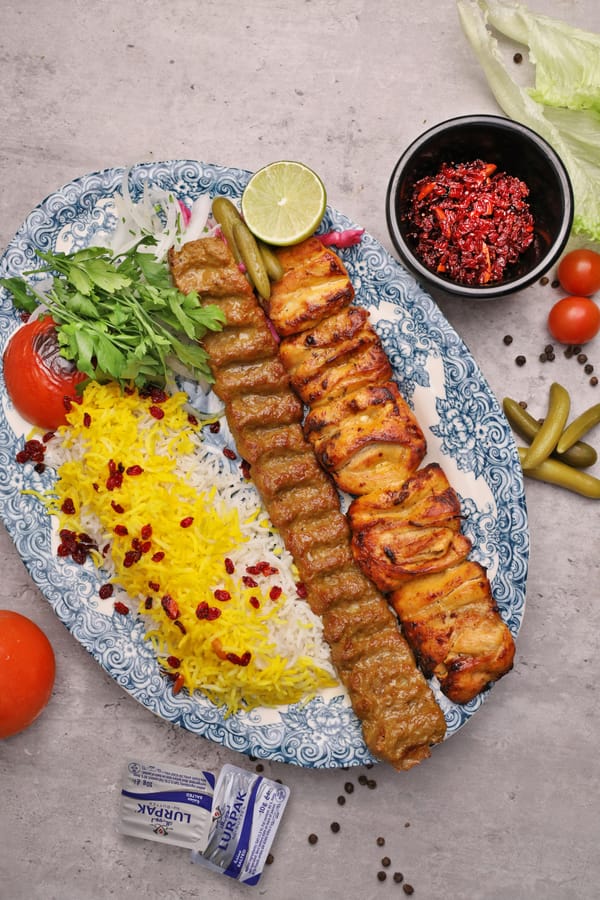
- Slide off and serve. Onto a bed of saffron rice, with grilled tomatoes, raw onion, sumac, butter pat on top of the rice, and lime.
Heat level
1 tbsp Aleppo flake gets you "warm." 2 tbsp gets you "Tabrizi proper." 3 tbsp is what my uncle does when he's trying to impress someone. Adjust to your table.
The right tool matters. If your kababs spin, drop, or split, it's usually the skewer — not the meat. See why we built ours 25 mm wide and 2 mm thick →