Koubideh Kabob: The Persian Family Recipe (and the Skewer Width That Actually Works)
Persian recipes and tools from an Iranian-American family.
There's a moment in every koubideh failure where you know it before it happens — the meat sags, slips, falls into the fire. You've seen it on every cooking blog that calls itself authentic and uses 5/8-inch skewers. There is no recovering it. The meat is gone.
This is the koubideh we make at home, the way our parents taught us, on the skewers we wished we could buy on Amazon — which is why we now make them.
What koubideh actually is
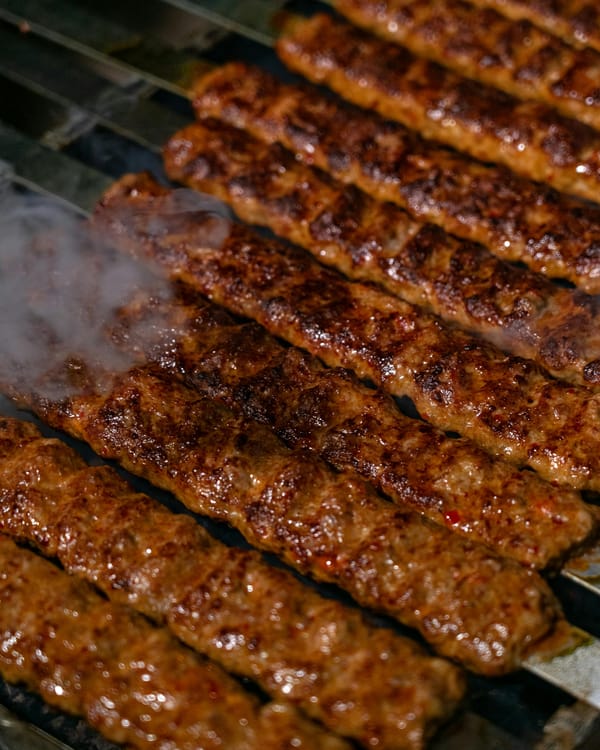
Koubideh (also spelled koobideh, kubideh — from koobeedan, "to pound") is ground meat kabob. Not cubed — pounded. Originally with a mortar and pestle, today with a stand mixer or your hands and a heavy bowl. The texture is what makes it: dense, almost paste-like before grilling. Loose ground meat won't survive a flame.
Two things make or break it. The meat-to-onion ratio and the skewer.
Ingredients (serves 4)
- 1 kg ground lamb (or a 60/40 lamb/beef mix — pure beef works but the lamb is what makes it Persian)
- 1 large yellow onion (about 300g) — grated finely, juice partially drained
- 2 teaspoons fine sea salt
- ½ teaspoon turmeric (optional — see note)
- 1 large egg yolk (optional binder for first-time cooks)
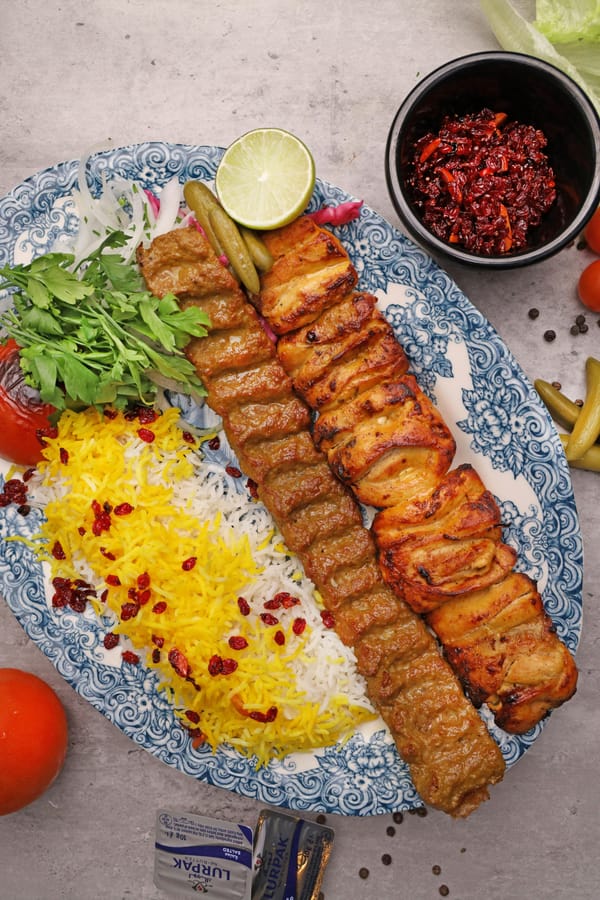
- For serving: sumac, grilled tomatoes, raw onion wedges, fresh sabzi (basil, mint, tarragon), butter rice with saffron, lavash bread, doogh
Note on turmeric: purists from northern Iran skip it. Tehrani cooks usually add a pinch. We use it. Heritage debate.
Equipment
- A heavy mixing bowl
- A box grater
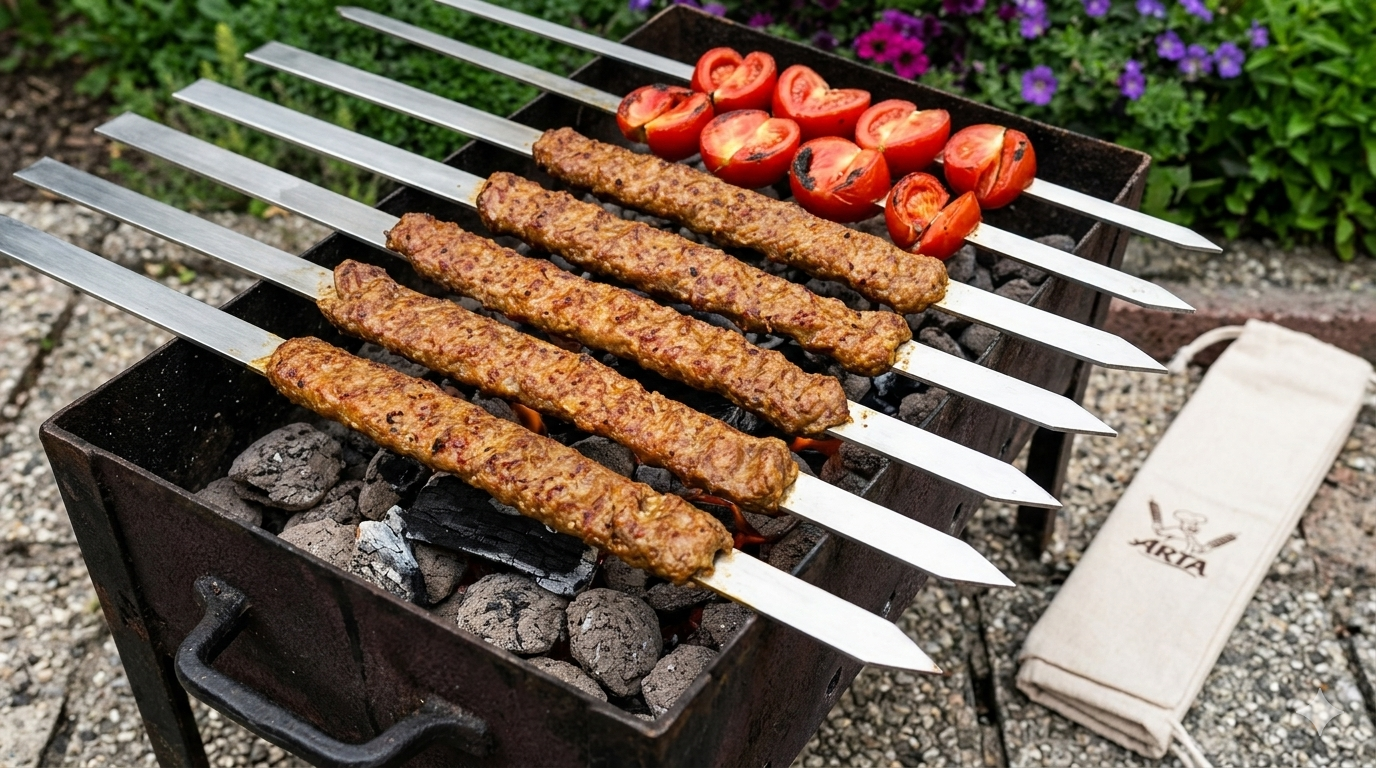
- Wide flat skewers, 1-inch wide minimum. This is non-negotiable. A 23-inch, 1-inch flat steel skewer is the right tool. Anything narrower won't hold the meat on under heat.
- A charcoal grill (ideal) or a hot gas grill
- Wet bowl or pitcher of water (for your hands)
Method
1. Grate the onion
Box-grater the onion on the medium holes into a bowl. Salt it lightly to help draw the water. Wait 5 minutes, then squeeze the pulp in your hands or through a sieve until it's about 60% as wet. You want flavor, not a wet meat mix.
2. Mix
Combine the meat, drained grated onion, salt, turmeric (if using), and egg yolk in a bowl. Now knead. This is the work. With clean hands (or a stand mixer with the paddle on low) work the meat for 5–7 full minutes. You will feel it change. It goes from loose ground meat to a sticky, almost pasty mass that holds its own shape. This is what makes it stay on the skewer.
3. Rest
Cover and chill 30 minutes minimum, up to 2 hours. The proteins relax and the salt does its job.
4. Shape on skewers
Light the charcoal — koubideh wants real flame, not gas. While it heats, divide the meat into 8 portions (one per skewer). Wet your hands. Take a portion, press it onto the center of the skewer, then close your fist around it and pull — squeezing in waves so it adheres along the full length of the skewer in a flattened cylinder about ¾ inch thick. Pinch the meat firmly at both ends. Pinch dimples along the length every inch — these dimples are what give koubideh its iconic textured look and stop the meat from contracting and sliding.
5. Grill
Drop the skewers across the grill so the meat hangs over the coals but the skewers themselves rest on the rails. Direct high heat. 3–4 minutes per side. Turn once. The meat will firm, brown, and pull slightly from the skewer at the ends — that's done.
6. Off the skewer
Lay a piece of lavash on a hot plate. Drop the skewers on it, then push the meat off the skewer with the back of your hand or a second piece of lavash. Cover with another lavash to keep warm.
7. Serve
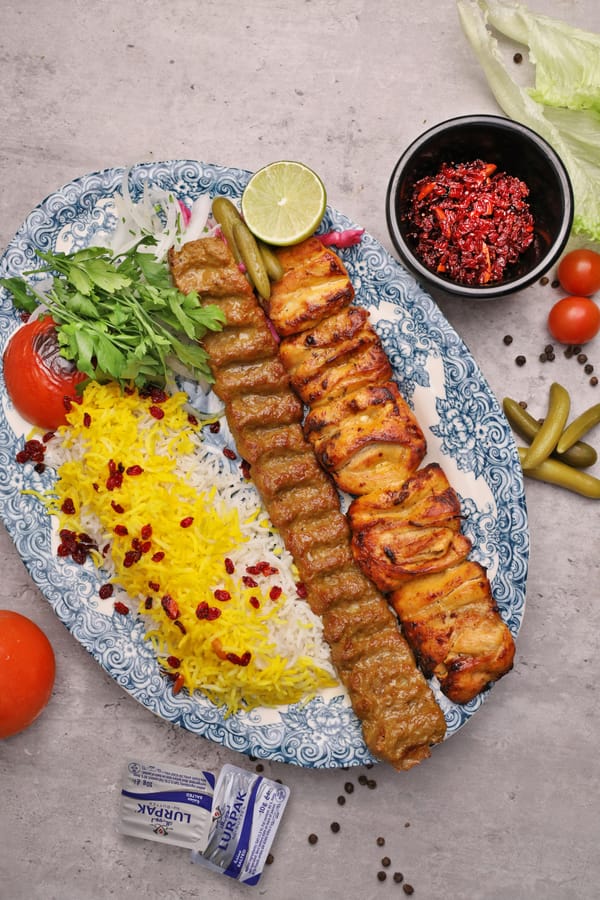
On a wide platter: butter rice with saffron in the center, koubideh on top, grilled tomatoes alongside, lavash on the side, sumac shaker on the table, raw onion wedges with fresh herbs.
Why the skewer matters more than you think
If you've ever made koubideh and watched it slide off in the middle of the grill, the problem isn't your technique. It's the skewer.
True Persian koubideh skewers are wide — 1-inch flat steel, traditionally. A round bamboo skewer cannot hold a kilo of seasoned ground meat. Even most "shish kabob" skewers sold on Amazon are 0.4–0.6 inches wide. They were designed for cubed meat. Ground meat needs surface area to grip.
When we couldn't buy real koubideh skewers on Amazon — every listing claimed to be Persian; none actually were — we made our own. 23 inches long. True 1-inch wide. Walnut handle, riveted, with the ARTA logo burned in. Waxed canvas roll-up bag, not a flimsy pouch. Shop the set →
If you don't buy ours, buy someone else's true 1-inch flat skewers. But please don't try this on bamboo.
Common mistakes
- Not kneading long enough. This is the #1 reason meat falls off. The 5–7 minute knead is what makes koubideh.
- Too wet onion. Drain the onion. Wet meat slides.
- Skipping the rest. Rest 30 minutes minimum.
- Cold meat on hot grill. Bring to room temp 15 min before grilling.
- Cheap skewers. See above.
What to serve with it
Classic full Persian dinner: koubideh, butter rice with saffron (chelow), grilled tomato, sumac, doogh (salted yogurt drink), fresh sabzi platter (basil, mint, tarragon, radish, scallion), lavash.
For a faster meal: koubideh sandwich in lavash with onion, sumac, and tomato. The street food version we ate after every soccer game.
What's next
Subscribe and the next recipe we'll publish is jujeh kabab — the saffron-marinated chicken kabob that's the koubideh's other half on a mixed Persian grill platter.
— The Arta Kitchen family