Chelo — Persian Saffron Steamed Rice from Scratch (with Tahdig)
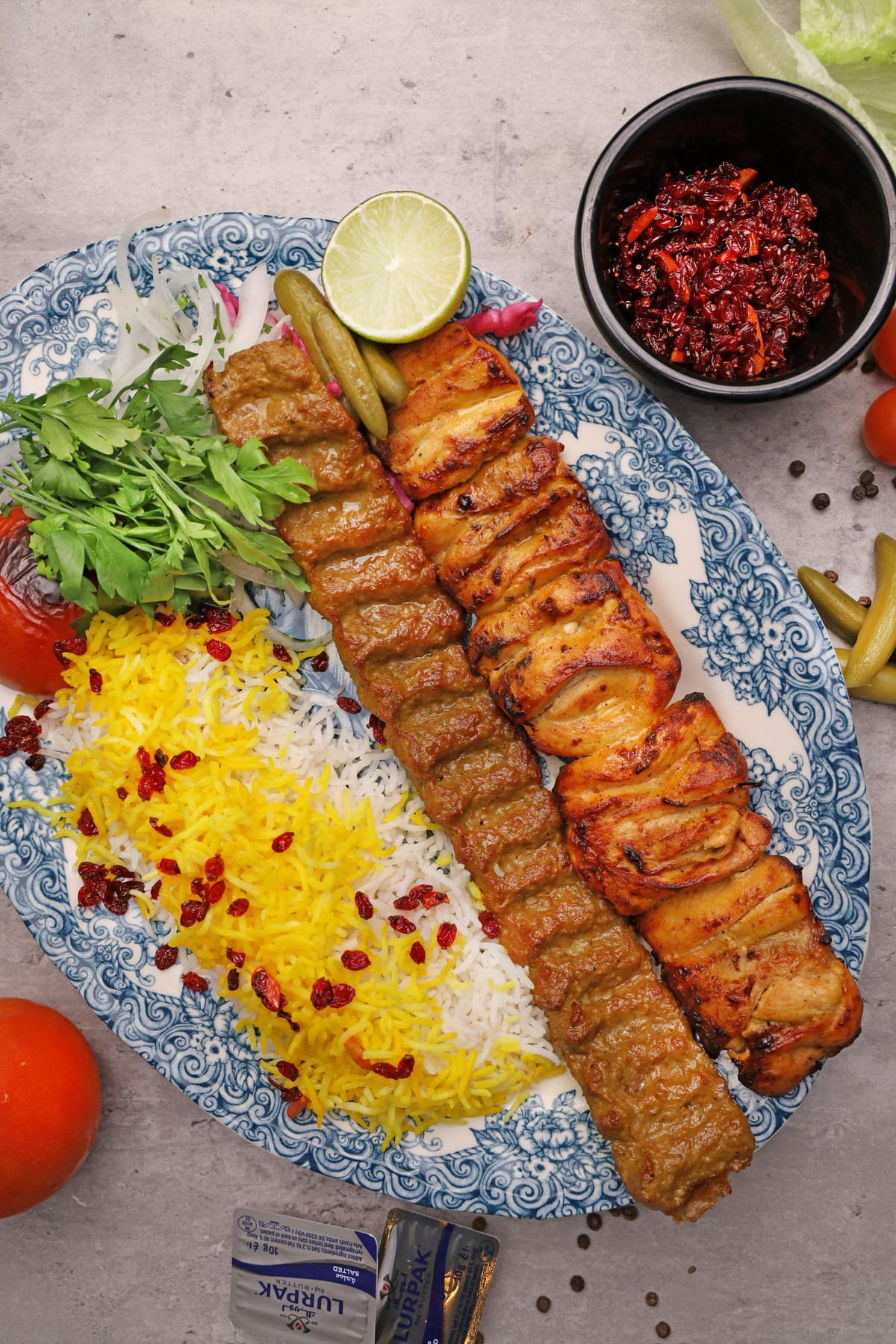
If you only learn one Persian recipe, learn this one. Chelo — plain saffron-steamed basmati — is the canvas every other Persian dish gets painted on. Kabobs sit on it. Stews drape over it. Yogurt scoops onto it. And buried at the bottom is the tahdig: a slab of golden, crackling rice crust that every Persian family fights over.
Done right, you get rice that's fluffy, separate-grain, lightly perfumed — not sticky, never gummy. The technique looks intimidating on the page; in practice it's mostly waiting and trusting the steam.
Why this method works (the short version)
Persian rice gets cooked in two stages: a brief boil to soften, then a long low steam to dry out and separate. The boiling step purges starch (this is why basmati doesn't clump). The steaming step lets each grain cook through evenly without crowding. Get those two right and the rice almost can't fail.
Ingredients (serves 4–6)
- 2 cups aged basmati rice (Pari, Lal Qilla, or any "extra-long grain aged" brand)
- 3 tbsp kosher salt for the soaking water + 2 tbsp for the boil
- 3 tbsp neutral oil (grapeseed, canola)
- 3 tbsp unsalted butter
- 2 tbsp Greek yogurt (for a creamy potato-style tahdig — see variations below)
- 1 tsp saffron threads, ground with a pinch of sugar, bloomed in 1/4 cup hot water
- 1 tbsp water (for the steam)
Equipment
- A non-stick pot, 4–6 qt with a domed lid (a cheap one is fine — non-stick is what saves the tahdig)
- A clean kitchen towel (to wrap the lid)
- A fine-mesh strainer
Method
- Rinse (5 min). Rinse the rice 4–5 times in cold water, swishing each time, until the water runs nearly clear.
- Soak (1 hour minimum, 4 hours ideal). Cover the rice with cold water + 3 tbsp salt. The salt seasons every grain from inside.
- Boil (6–8 min). Bring 8 cups of water to a hard rolling boil. Add 2 tbsp salt. Drain the soaked rice, then add to the boiling water. Stir once. Boil uncovered — the rice is done with this stage when a grain bends without snapping but still has a firm center. Start tasting at 5 minutes. Drain immediately in a fine-mesh strainer and rinse with lukewarm water to stop the cook.
- Build the tahdig (3 min). Wipe the pot. Add 3 tbsp oil + 2 tbsp butter over medium heat. When melted, mix 2 tbsp yogurt with 1/2 cup of the parboiled rice in a bowl. Spread this mixture evenly across the bottom of the pot — pat it flat. This is your tahdig layer.
- Mound the rice (1 min). Add the remaining rice in a loose pyramid. Don't pack it. Poke 5–6 deep holes with the handle of a wooden spoon — these let steam escape from below.
- Steam, stage 1 (8 min on medium-high). Drizzle 1 tbsp water and 1 tbsp melted butter over the mound. Wrap the lid in a kitchen towel (the towel absorbs condensation that would otherwise drip back and make the rice soggy). Cover and cook on medium-high until you hear and smell a steady sizzle — about 8 minutes.
- Steam, stage 2 (40 min on low). Drop the heat to low. Steam 40 minutes. Do not lift the lid. Trust the pot.
- Color the rice (2 min). Spoon out 1 cup of the cooked rice into a bowl. Pour the bloomed saffron over it. Toss gently — it should turn a deep gold.
- Plate. Scoop the white rice onto a wide platter in a pile. Crown with the gold saffron rice. Drizzle any leftover saffron water across the top.
- Crack the tahdig. Run a thin spatula around the edges of the pot. Invert onto a plate (or break apart with the spatula) — the golden crust comes out in shards. Pass it around. It vanishes fast.
Tahdig variations
- Potato tahdig: Replace the yogurt-rice layer with thin slices of peeled potato, salt, and oil. Cook same way. The starchiest, most forgiving version.
- Lavash tahdig: Lay a sheet of lavash bread on the bottom oil. Most fragile but most universally loved.
- Pure rice tahdig: Skip the yogurt. Just spread parboiled rice directly on the oil. Classic and clean.
What to do with it
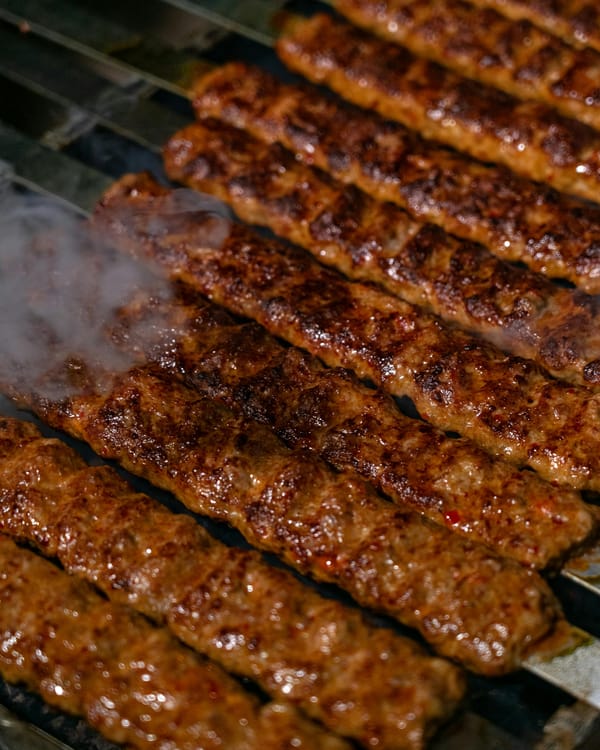
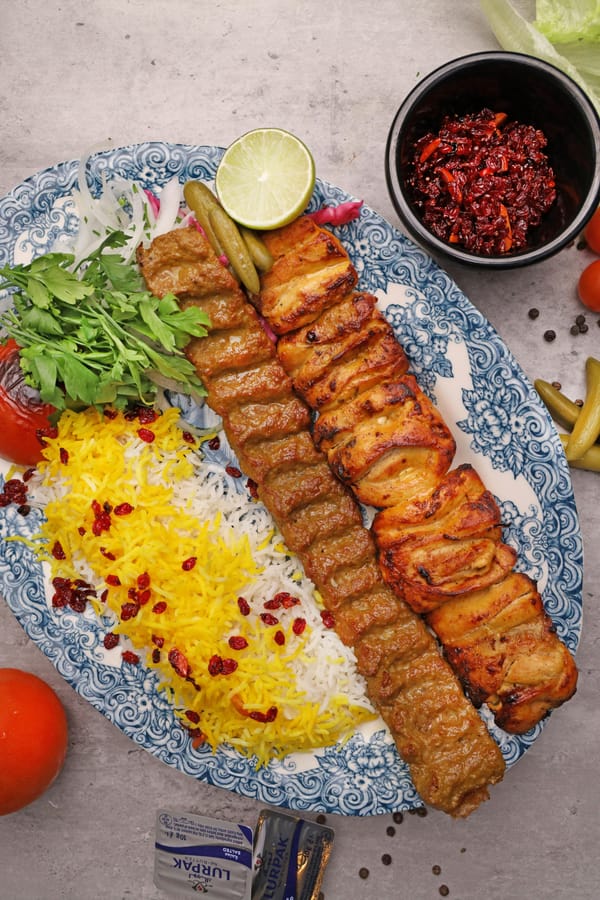
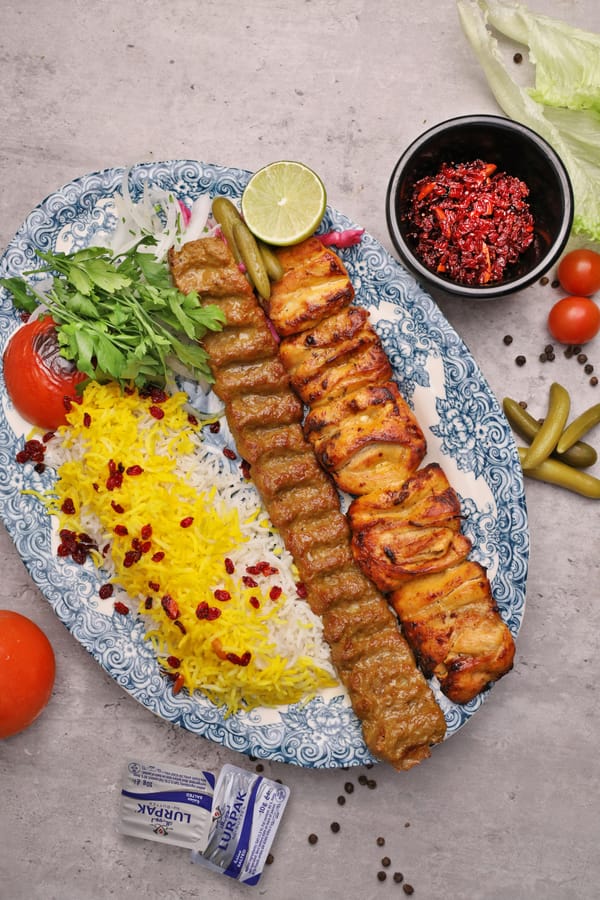
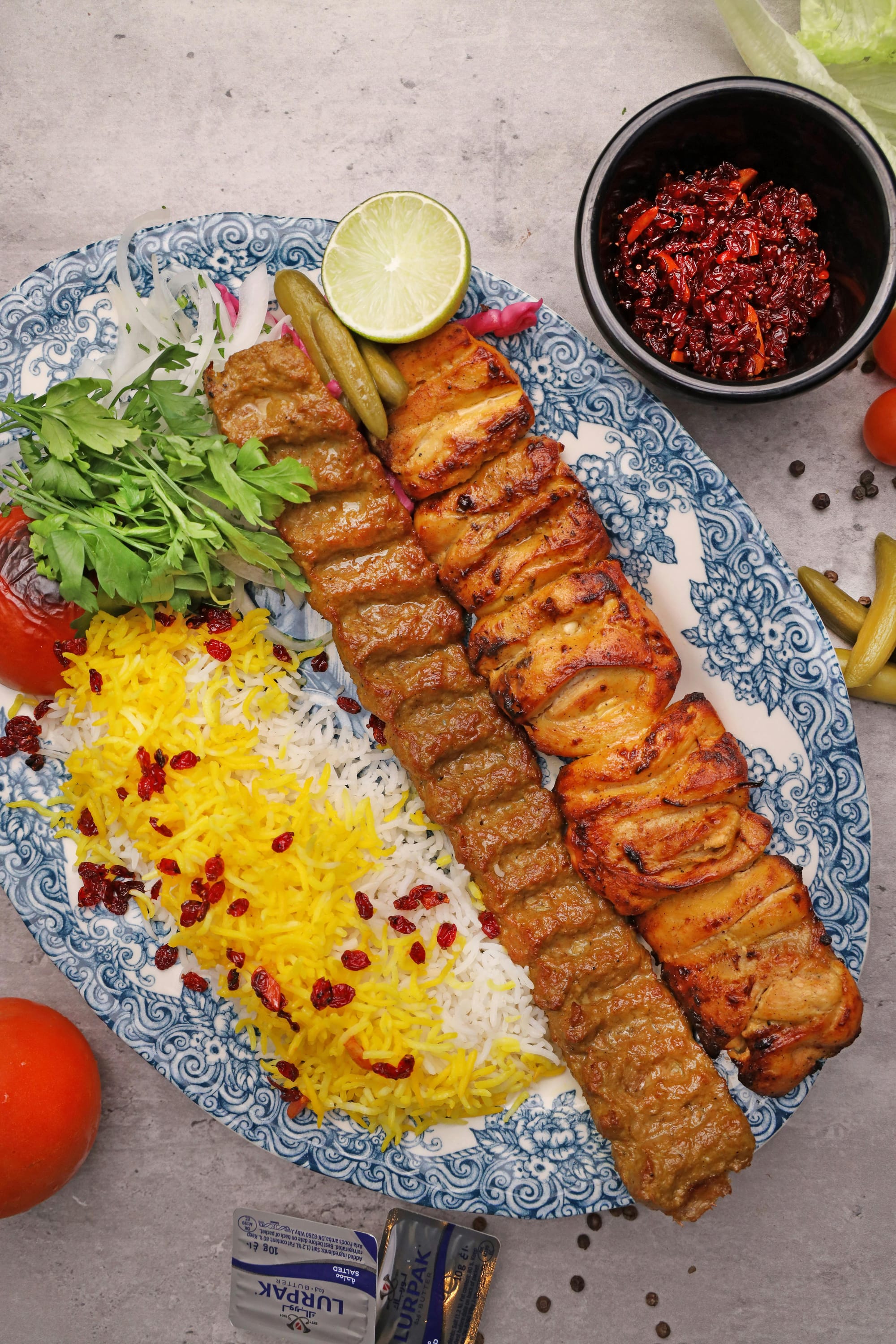
Lay Koubideh across the top. Spoon barberries over half. Pour Joojeh chicken juices into the gold half. Set a pat of butter on the pile so it melts down. Eat with mast-o-khiar on the side. That's the meal.
The right tool matters. If your kababs spin, drop, or split, it's usually the skewer — not the meat. See why we built ours 25 mm wide and 2 mm thick →